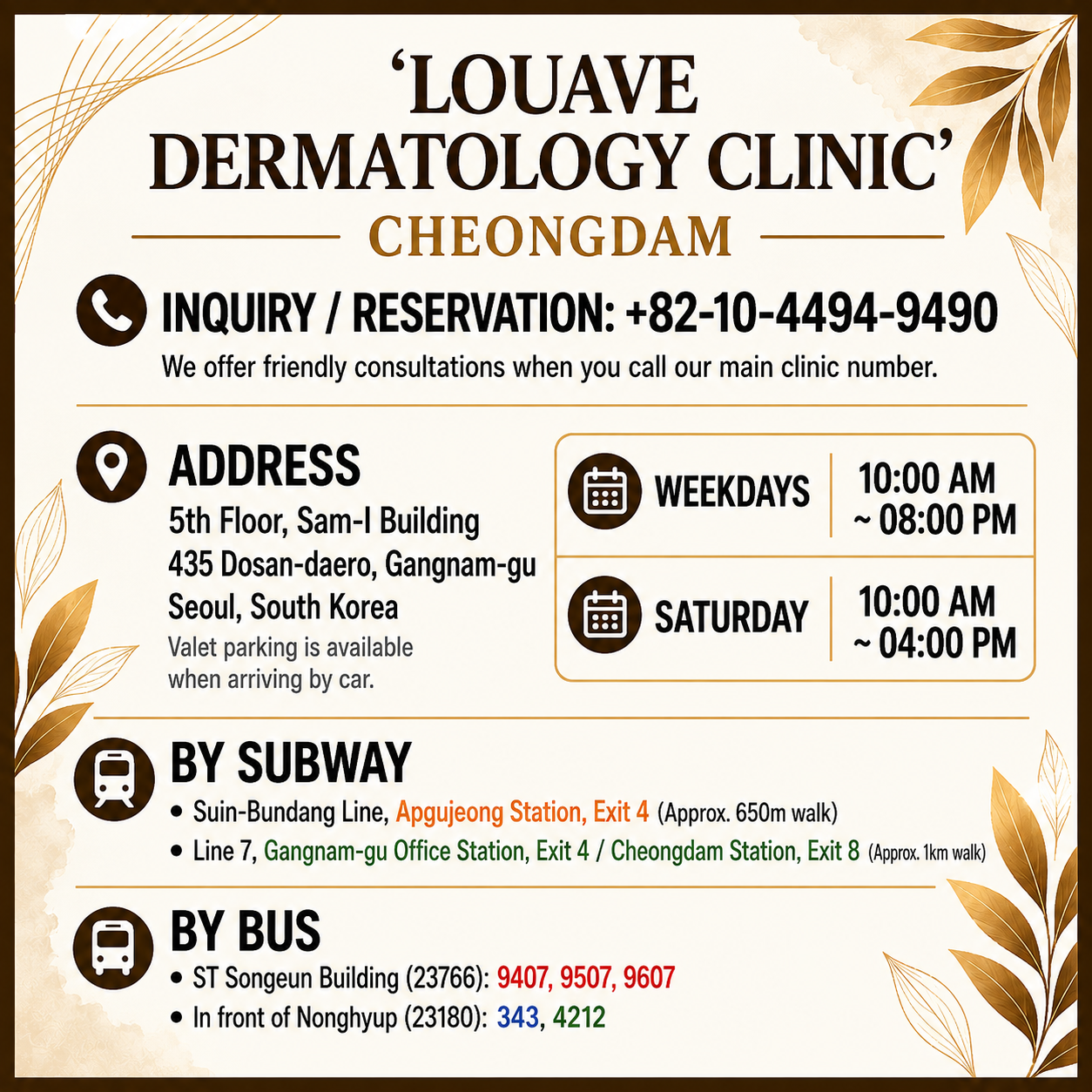
Board-Certified Dermatologist in Seoul for Foreigners
Board-Certified Dermatologist in Seoul for Foreigners
International patients searching for a board-certified dermatologist in Seoul may need care for acne, pigmentation, rosacea, hair loss, nail disorders, skin cancer screening, or cosmetic procedures.
In Korea, the more accurate local term is usually dermatology specialist. This refers to a licensed physician who has completed recognized specialist training and obtained specialist qualification in dermatology—not simply a doctor who offers lasers or skincare procedures. Korea regulates specialist training and qualification under its medical specialist system.
Why Specialist Qualifications Matter
Dermatologists are trained to diagnose and treat conditions affecting the skin, hair, and nails. This medical background is also important when performing cosmetic procedures.
Specialist evaluation can help distinguish between concerns that may look similar, such as:
- Acne and folliculitis
- Rosacea and sensitive skin
- Melasma and ordinary sun spots
- Eczema and contact dermatitis
- Fungal nail disease and nail psoriasis
- Temporary shedding and scarring hair loss
- Benign moles and suspicious skin lesions
Cosmetic treatments may appear easy to perform, but safe treatment requires knowledge of the skin and deeper facial structures. Practitioner skill and experience can significantly affect both results and complication risk.
Not Every Skin Clinic Is Specialist-Led
A clinic may offer lasers, injectables, acne care, or anti-aging packages without every treating doctor being a dermatology specialist.
Before booking, ask:
- Is the doctor a certified dermatology specialist in Korea?
- Who will perform the consultation?
- Who will select the treatment settings?
- Who will operate the laser or inject the product?
- Does the doctor regularly treat my condition?
- Will the same physician provide follow-up care?
The Korean Dermatological Association provides a public clinic-search service that patients can use when looking for dermatology practices, including clinics in Seoul and Gangnam.
Medical Diagnosis Should Come First
A dermatologist should evaluate the underlying cause before recommending a cosmetic procedure.
For example:
- Facial redness may require rosacea treatment rather than a general brightening laser
- Brown patches may be melasma, which can worsen after excessive heat or inflammation
- A changing mole may require dermoscopy or biopsy instead of laser removal
- Active acne should be controlled before scar treatment
- Painful hair loss may indicate inflammatory or scarring alopecia
- Persistent nail discoloration may require fungal testing or biopsy
Treating only the visible surface without confirming the diagnosis may delay appropriate care or aggravate the condition.
English Communication and Interpretation
Some Seoul dermatology clinics provide direct consultation with an English-speaking doctor. Others communicate through an interpreter or international patient coordinator.
Before the appointment, confirm:
- Whether the doctor personally speaks English
- Whether an interpreter will attend the consultation
- Whether consent forms are available in English
- Who explains medication and aftercare
- Whether English assistance is available after treatment
- How urgent questions will be handled after departure
Coordinators can assist with scheduling, payment, and general instructions. However, the physician should clearly explain the diagnosis, expected benefits, alternatives, risks, and follow-up requirements.
What to Bring to the Appointment
International patients can prepare:
- A list of medications and supplements
- Known allergies
- Previous diagnoses
- Blood-test or biopsy reports
- Photographs of earlier symptoms
- Names and dates of previous procedures
- Exact filler or injectable product names
- Current skincare products
- Information about pregnancy or breastfeeding
- A record of previous treatment reactions
Photographs are particularly useful for intermittent conditions such as hives, swelling, flushing, or recurring rashes that may not be visible during the appointment.
Choosing Cosmetic Treatment Safely
For lasers, injectables, peels, or energy-based procedures, ask for the exact treatment information rather than relying only on a package name.
Confirm:
- Device or product name
- Treatment purpose
- Areas being treated
- Number of recommended sessions
- Expected improvement
- Possible downtime
- Common and serious complications
- Who performs the procedure
- How complications are managed
Treatment settings should be adjusted according to the diagnosis, skin tone, pigmentation tendency, recent sun exposure, and previous reactions.
A dermatologist may also recommend delaying treatment when there is active infection, dermatitis, inflamed acne, recent sunburn, or an undiagnosed lesion.
Registered Services for Foreign Patients
Korea operates a registration system for medical institutions that attract and treat foreign patients. Medical Korea provides tools for checking registered institutions and accredited providers.
Registered institutions serving foreign patients are subject to specific requirements, and Medical Korea states that registered medical institutions have been required to maintain medical malpractice liability insurance since 2016. Registration is useful information, although it does not by itself guarantee that a particular doctor or procedure is suitable for every patient.
Patients should consider both:
- The clinic’s foreign-patient registration status
- The individual doctor’s specialist qualifications and experience
Planning Treatment During Your Stay
Tell the dermatologist about:
- Length of stay
- Departure date
- Important events
- Available recovery time
- Planned outdoor activities
- Follow-up options at home
A short visit may be suitable for consultation, prescription skincare, dermoscopy, or a conservative procedure.
Additional time may be required for:
- Patch testing
- Skin or nail biopsy
- Pathology results
- Stitch removal
- Strong laser resurfacing
- Multi-session scar or pigment treatment
- Management of an unexpected complication
Before leaving Seoul, request treatment records, product names, aftercare instructions, and any information needed by a doctor in your home country.
Questions to Ask During Consultation
Consider asking:
- Are you a certified dermatology specialist in Korea?
- What is my diagnosis?
- Is cosmetic treatment appropriate for this condition?
- Who will perform the procedure?
- What device or product will be used?
- Is the treatment suitable for my skin tone?
- What results are realistic?
- What complications are possible?
- How much recovery time is needed?
- How will follow-up continue after I leave Korea?
Choose Qualifications, Communication, and Follow-Up Together
Finding a board-certified dermatologist in Seoul for foreigners involves more than choosing a clinic with English advertising or popular treatment packages.
Patients should confirm the physician’s dermatology specialist qualification, ensure that medical communication is clear, and understand exactly who will diagnose, treat, and provide follow-up care.
A specialist-led, diagnosis-based approach can help international patients receive treatment that matches their skin condition while reducing unnecessary procedures and avoidable complications.